




Aedade eri: Inkodu soovitab, autor Jane Rohtsalu, ekspert: Maria Palusalu
You don't have to wait for the garden to wake up. Spring starts exactly when you let it start in your garden. Perennial planting expert Maria Palusalu shares ideas with Inkodu https://www.inkodu.ee/ on how to bring spring into your own - in a pot, on your balcony, with your own hands, right now.
Why a container and not a bed?
Spring container plantings are the first to bring life and freshness to the garden, and they do so very quickly. When plants are still dormant and beds are empty, one well-made planting pot can completely change the look of your entrance, balcony or patio. That's why today we're talking about container gardening as a great way to bring spring life and freshness to your garden before it even wakes up. According to Maria, spring containers are like small gardens that can be brought into places where colour and life are not yet present - be it a balcony, terrace, entrance or a quieter corner.
A single container on a balcony, in a lounge area or at the entrance, for example, can bring the arrival of spring that much closer, so you don't have to wait anxiously for the snowdrops or cornflowers to start growing in the flowerbed. A single, well-planned container can bring a whole garden corner to life and bring joy from the first warm weather.
Today, garden centres and nurseries have a wide range of interesting spring flowers to plant in container pots. It's also worth taking an open look around the countryside, where you can already see a variety of carnations alongside the bluebells that are blooming in the woods, which are ideal for pots and add structure and airiness to the planting with their grassy foliage.
Before planting, think about what you want the planting to achieve
A result that offers real beauty and lasting beauty never starts by simply buying the first plants that catch your eye in the garden centre. First, it's worth figuring out what you want to achieve.
Do you want to create an eye-catcher at the entrance? Or to make the patio more cosy so that you can enjoy your morning coffee even more? Maybe you dream of a burst of colour in April? Or would you prefer a more prestigious welcome?
It may seem simple, but it's up to you to decide whether your future planting will finally deliver the result you've been waiting for. After all, all the flowers in the garden centre look beautiful, but the one that catches your eye at the moment may not be the right one for the space you need to design. That's why it's always a good idea to start with the result you want, not just the pretty plants.
The right container: bigger is better
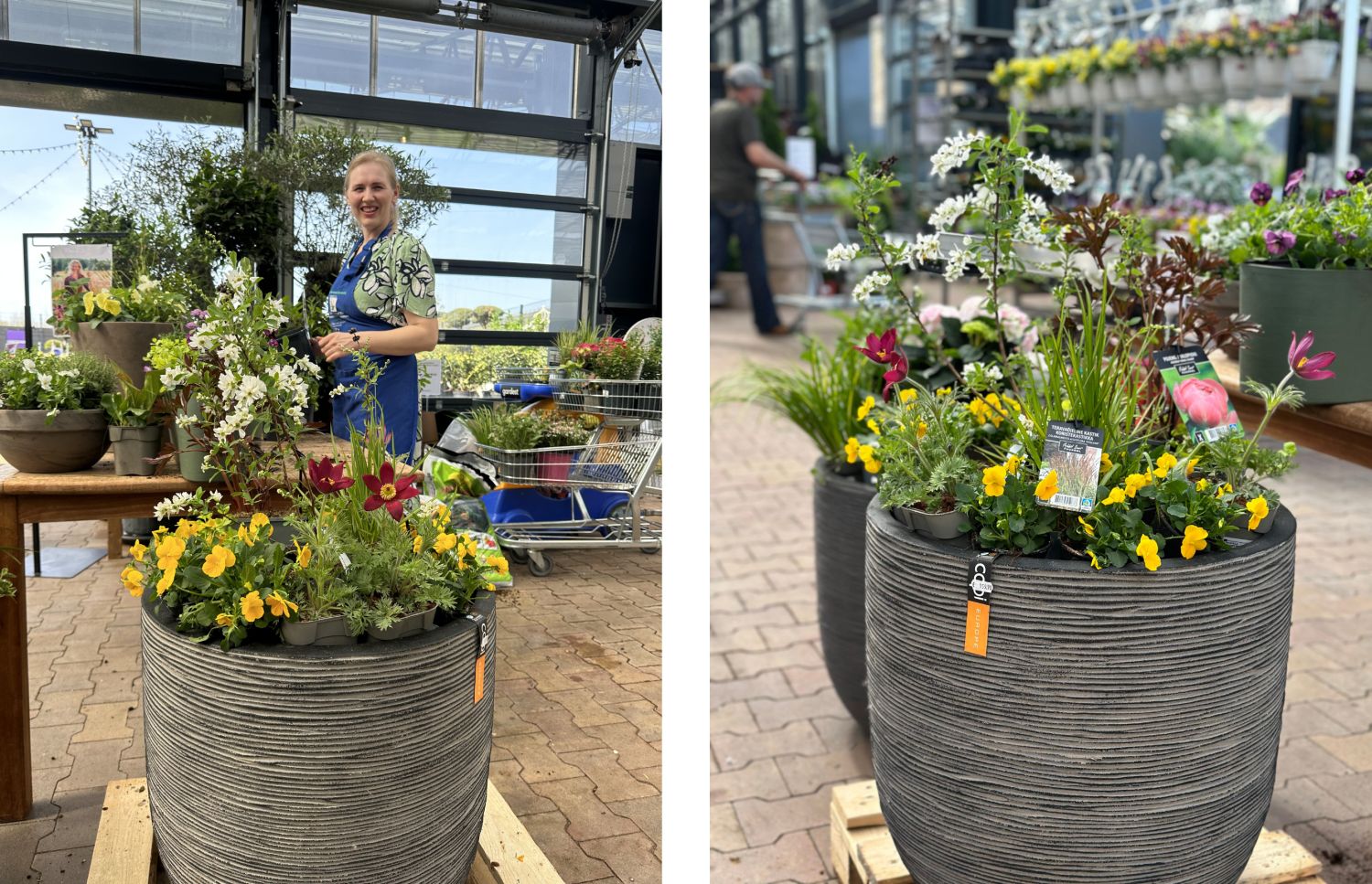
Once the vision of the desired result is clear, the next step is to choose the container. Rule number one is simple: always choose a larger container than initially seems necessary.
Smaller containers will dry out quickly, especially in windy areas, and will need more care. Although you don't have to fight the heatwaves in spring yet, larger pots and containers give you the opportunity to create more striking arrangements, add more texture and offer a richer floral experience. A larger container also makes it easier to achieve that lush, holistic spring look that containers are often sought after for.
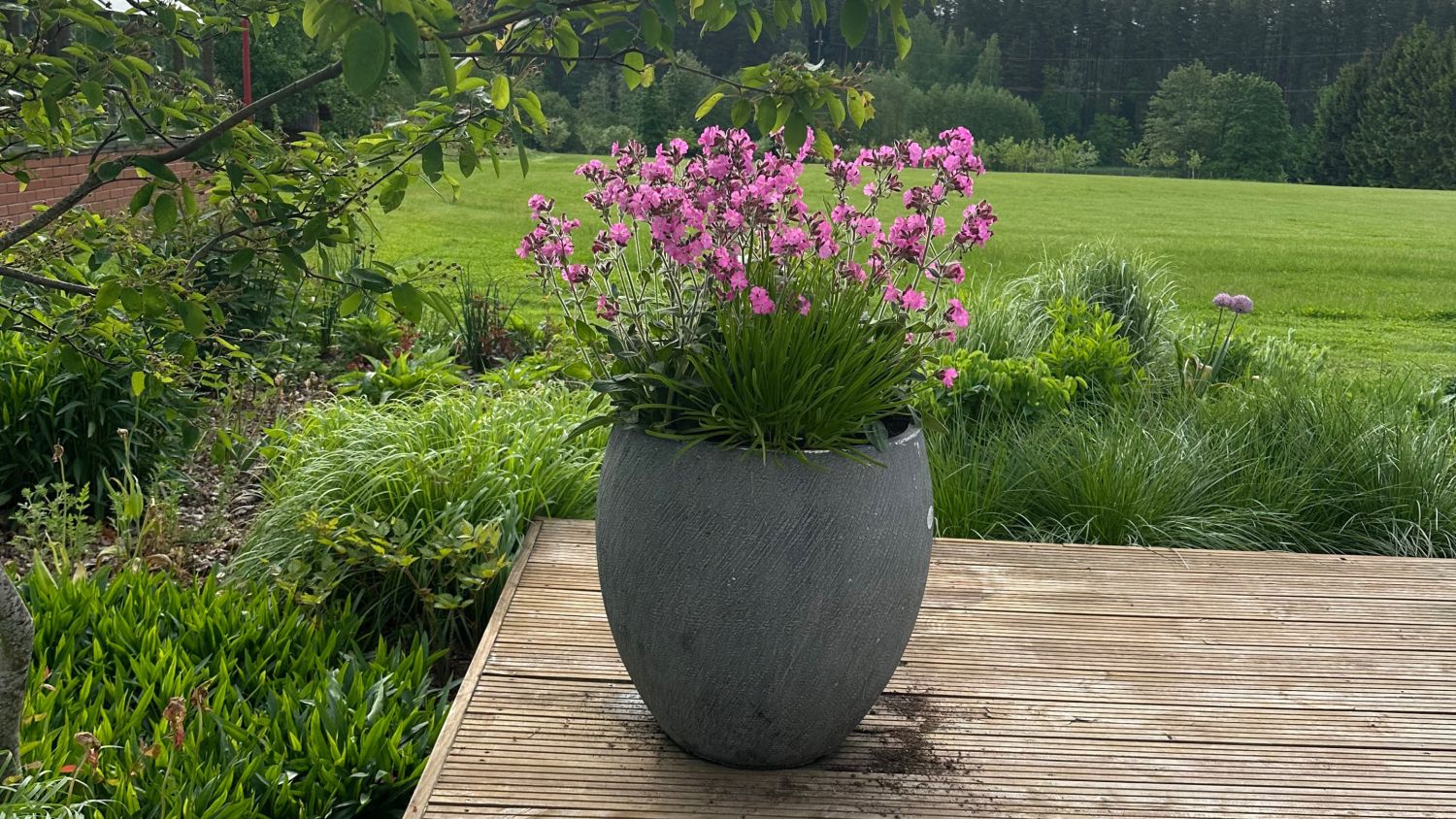
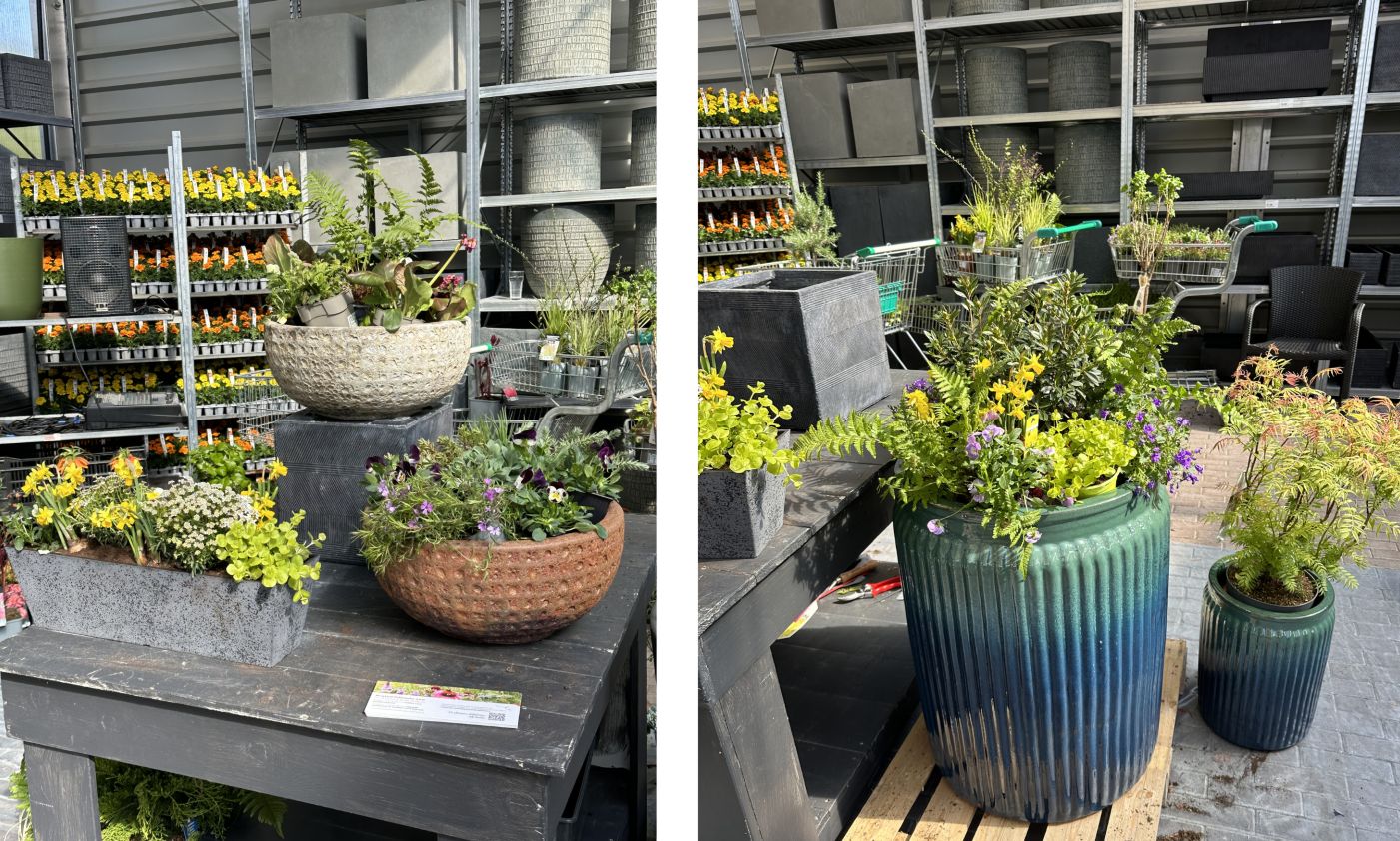
The pot should also match the style of the house and surroundings. Classic clay pots and ceramic containers, for example, are suitable for a peaceful façade. If the background is already rich in detail, the container should remain rather simple and calm, so that the overall impression does not become too restless. However, for a clean and understated background, Maria recommends adding a pot with a spicier character.
It's definitely worth making sure the pot has drainage holes. If there's no hole in the bottom, you should make one yourself or use another pot with holes in it. Without a drain, water will accumulate in the pot and the plants may eventually rot.
From a design point of view, two or three pots in a similar style will usually work better than a single container left on its own. Repetition creates order and harmony. Therefore, the choice of pot is not only a practical decision, but also has a direct impact on the overall impression the planting will ultimately make.
Soil and watering are as important as the plants themselves.
Good soil is just as important as the plant itself, but this is usually only noticed when something goes wrong.
Random and cheap soil is not worth using. Choose a good quality potting soil that is specifically designed for potted plants, such as Matogard soil mixes https://www.matogard.ee/ or Estonian Turbo Products https://www.inkodu.ee/as-eesti-turbatooted-turbatoodete-ning-kasvusubstraatide-tootmine-ja-muuk/1354 or Biolan peat substrates. Adding compost to the mix is also a good idea. Matogard already has compost in its soil mixes, but others can be mixed in separately.
Inexpensive soils are often of poorer quality as the nutrient balance can be out of balance. Plants will be weaker in such soils and may mould more easily. The successful growth of a plant in a container is therefore very much dependent on the conditions it is given. A plant growing in a container is much more dependent on the conditions in the pot than a plant growing in a container.
When planting, it is important to water plants thoroughly, especially daffodils and tulips, as they have a dense root system and a high water requirement. Wind and sun can dry out a planting unexpectedly quickly, so monitor moisture levels regularly. But excessive moisture is also dangerous. If the plant is leggy and the soil feels wet when you touch it with your finger, you have too much water. This can lead to root rot quite quickly.
For the spring container, choose plants that can tolerate coolness.
Plants that can tolerate cool temperatures and night frosts are suitable for spring containers, as this is quite normal in April in Estonia. It's also worth thinking about the shape of the flowers and the foliage, or in other words, how they work together. A good combination is not just about colour. Putting together different coloured hostas and hornworts will give a cheerfully colourful result. But if you want a more showy planting, it's also worth making sure that the foliage structures and perhaps the flower shapes are different.
Here are some tips to build on.
Hornworts are Maria's absolute favourite. They have many more blooms than the non-native species, produce a large clump of flowers and last until mid-June. Alien species tolerate frosts of up to five degrees but require constant removal of old flowers. The hornwort, on the other hand, will continue to flower without special care.
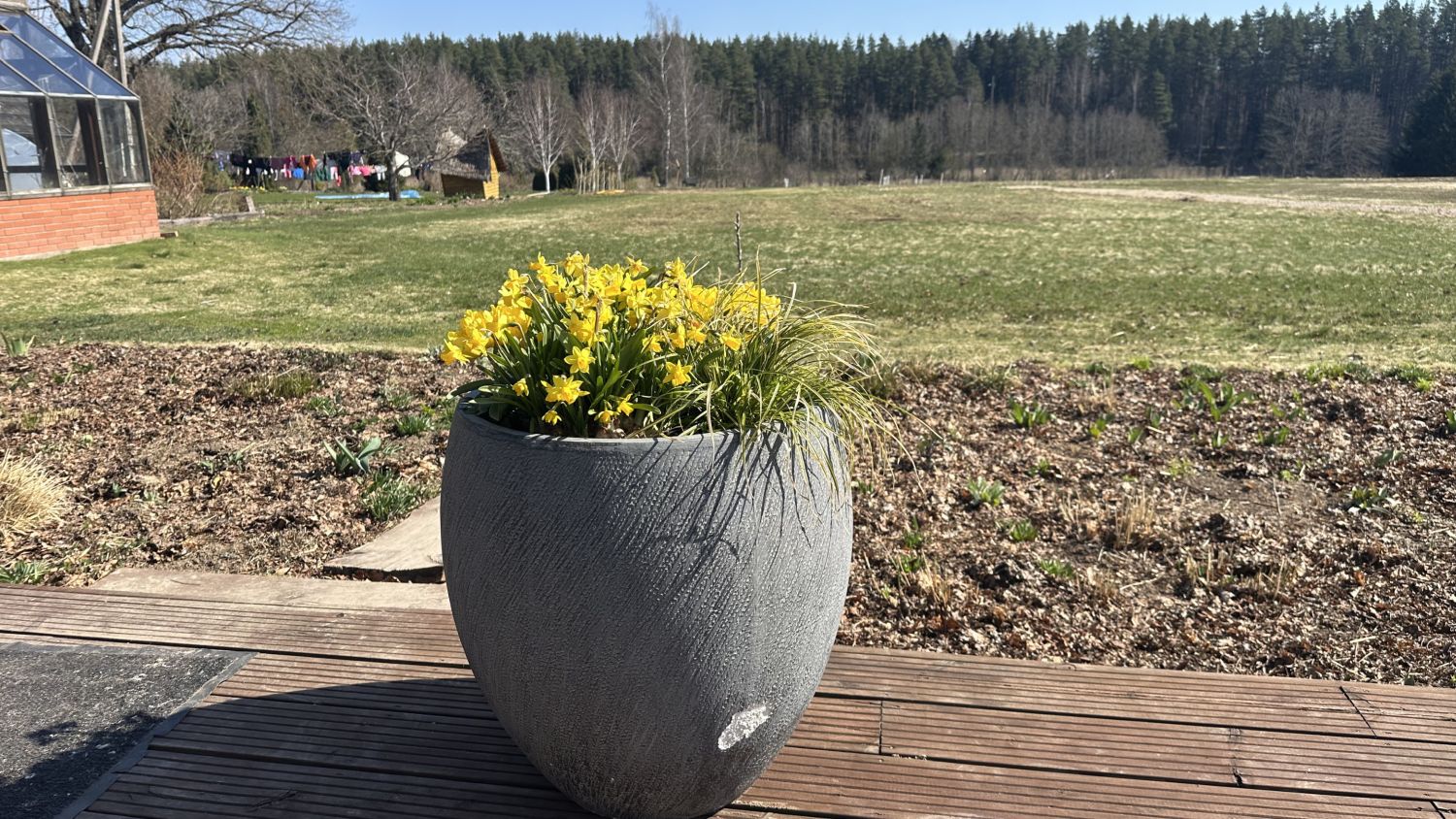
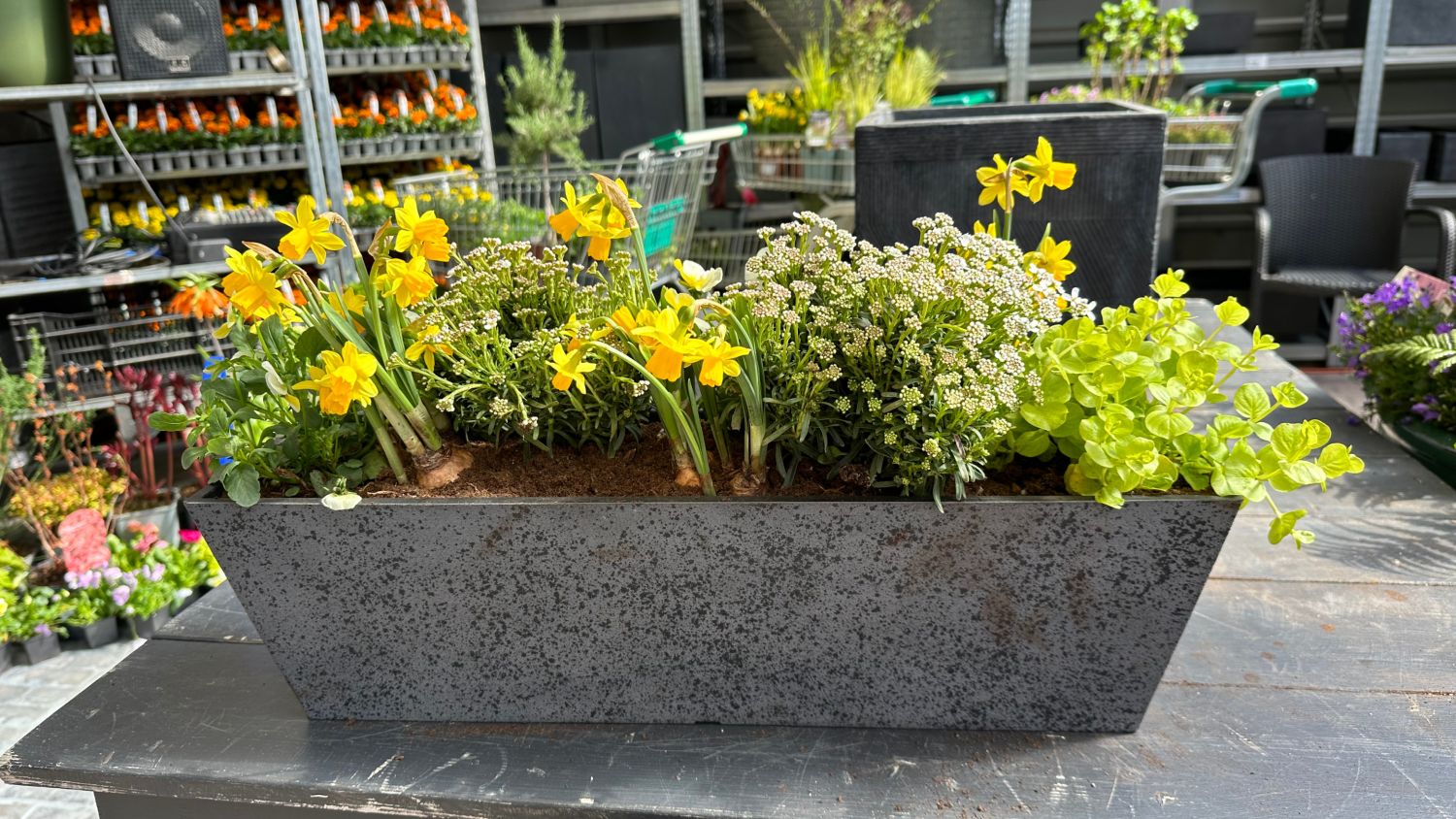
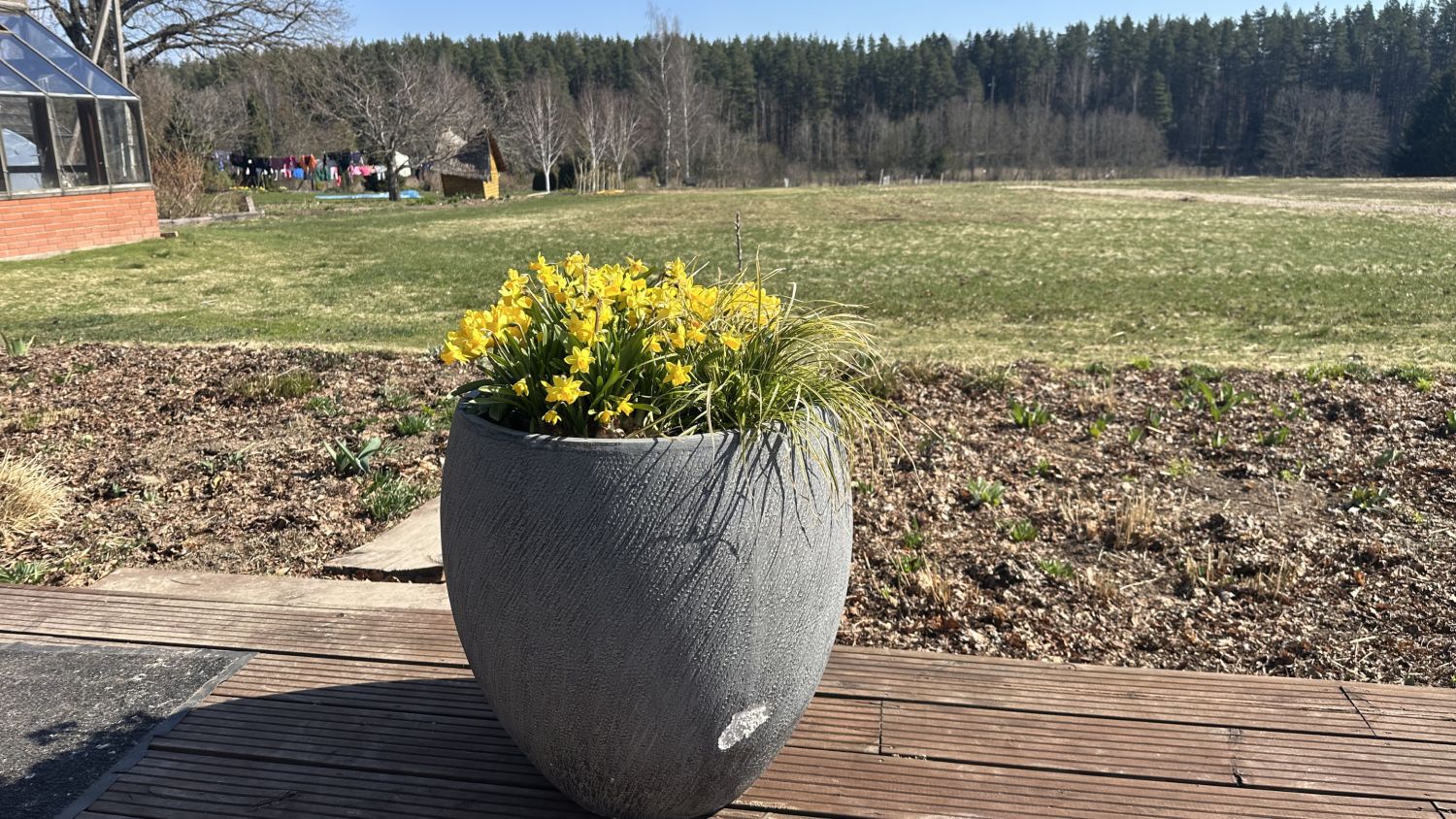
Daffodils are early and frost hardy. For example, the much-loved Tete-a-Tete is a long-flowering variety with small yellow flowers. The larger white daffodils will add height to the container. Both also cope well with night frosts.
Tulips can also tolerate April frosts, as long as minus temperatures don't get too extreme. Their flowering period is shorter than that of the horned lily, but the visual effect is strong.
Hyacinths and hornbeam onions are widely available in garden centres as time-ripened bulbs. Hyacinths bring not only beauty but also fragrance to the container. If you want to smell spring on your patio, go for oriental hyacinth.
According to Maria, the garden hyssop is not very common as a pot plant in Estonia, and for good reason. This biennial plant flowers very well and for a long time. There are both pink and blue-flowered varieties and it lasts a long time in containers.
The broomcorn is a good choice for a more shady spot. It's sometimes even sold in the houseplant section of garden centres, but it's actually very suitable in a spring container. With its green foliage that extends over the pot's top, it makes a pretty sight.
The stems give the container a grassy, airy texture. This effect cannot be achieved with flowers alone. The strawberry is a great favourite of Maria, even though it is not frost hardy in Estonia. Maria laughs that when the desire arises to add such an effect to a planting, she uses it anyway. Tar can also just be brought from the forest. In our woods, you can find a perfectly nice medium-growing bushy form of strawberry with new leaves already growing. Moss is also always a great ground cover.
Ornamental sprigs will add height and character to a container even if you don't want to plant anything else. For example, willow and conifer sprigs work well.
Logic of plant selection: the leader and its supporters
It's not just about which plants to choose, but also how to combine them.
You should always start with a single vascular plant that sets the mood for the planting.
Want a happy and fresh result? Choose yellow daffodils or yellow tulips, because yellow symbolises spring, energy and sunshine.
Want a romantic and soft result? Choose pink, blue or purple tulips and horned carnations.
Want a foolproof and long-lasting solution? Hornflowers are the best choice. Tulip and daffodil flowering times are only a fraction of that of the hornwort, as they are quickly over when the weather gets warm.
Once the lead plant has been chosen, add supporting plants on the principle that they will not compete with the main plant. The supporting plant should enhance the mood rather than distract. A good balance is created between a main plant with larger flowers and a support or companion with more modest flowers. For example, daffodils with white or lilac bracts, pink tulips with light bracts or hyacinths with shallow primroses and bracts.
Less colour, more layering and playing with height.
One pitfall that is easy to fall into is too many colours in one pot. They're all beautiful in the garden centre, but unthoughtfully combined in one pot they look more like noise than beauty.
For example, you can get a beautiful result by combining:
White + green (white daffodils, white hostas, ivy) = calm and elegant.
Yellow + purple (yellow daffodils, purple hornworts) = a strong and cheerful contrast.
Pink + white + light green (pink tulips, white hyacinths, tarn) = soft and airy.
Natural combination (white flowering plant + green leafy ornamental plant + moss + decorative sprigs) = calm, garden and timeless.
As well as colour, it's worth thinking about texture and height. If you only have low alien plants in the container, the proportions will be a little flat. Add something to give height, such as taller daffodils, tulips, ferns and twigs, and something that falls over the edge, such as broom grass. This gives the container a backbone. Another very good plant is the bergeenia, which is very well suited to spring containers because at some point it starts to flower, but it also has powerful leaves. In addition, it is also suitable for a more shady spot.
For inspiration: examples of spring container plantings
The examples below give an idea of the variety of results that can be achieved with spring container plantings. There are simple and quick solutions, as well as more elaborate arrangements that play with colour, height and texture. See which mood speaks to you and use the ideas to suit your space and taste.
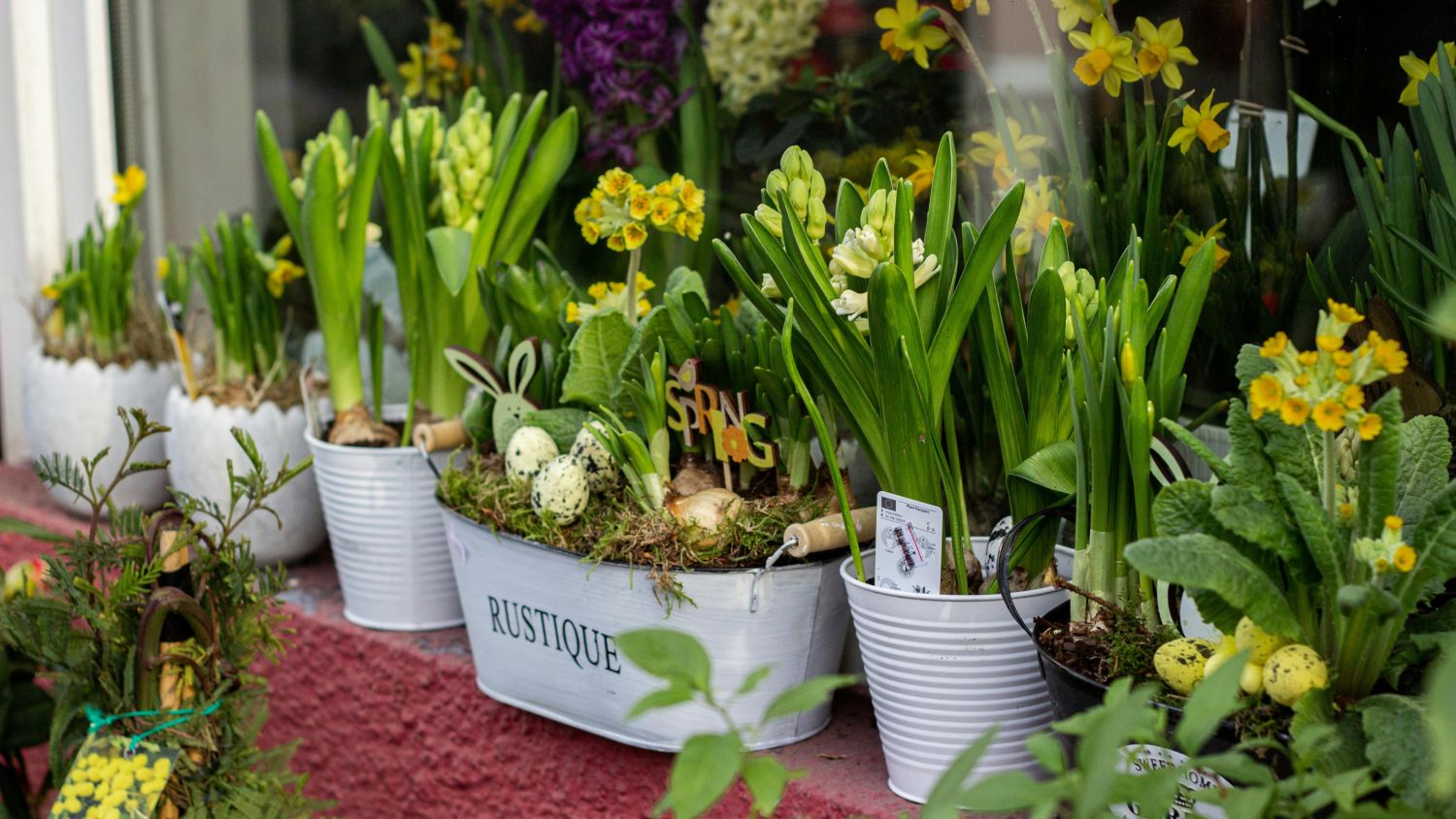
1.Small, repeatable pots on the windowsill. The advantage of small pots is flexibility and repeatability: you can put a different plant in each pot, and when one fades, you can simply replace it. The risk of drying out is higher, but the visual effect on a window or staircase is lovely.
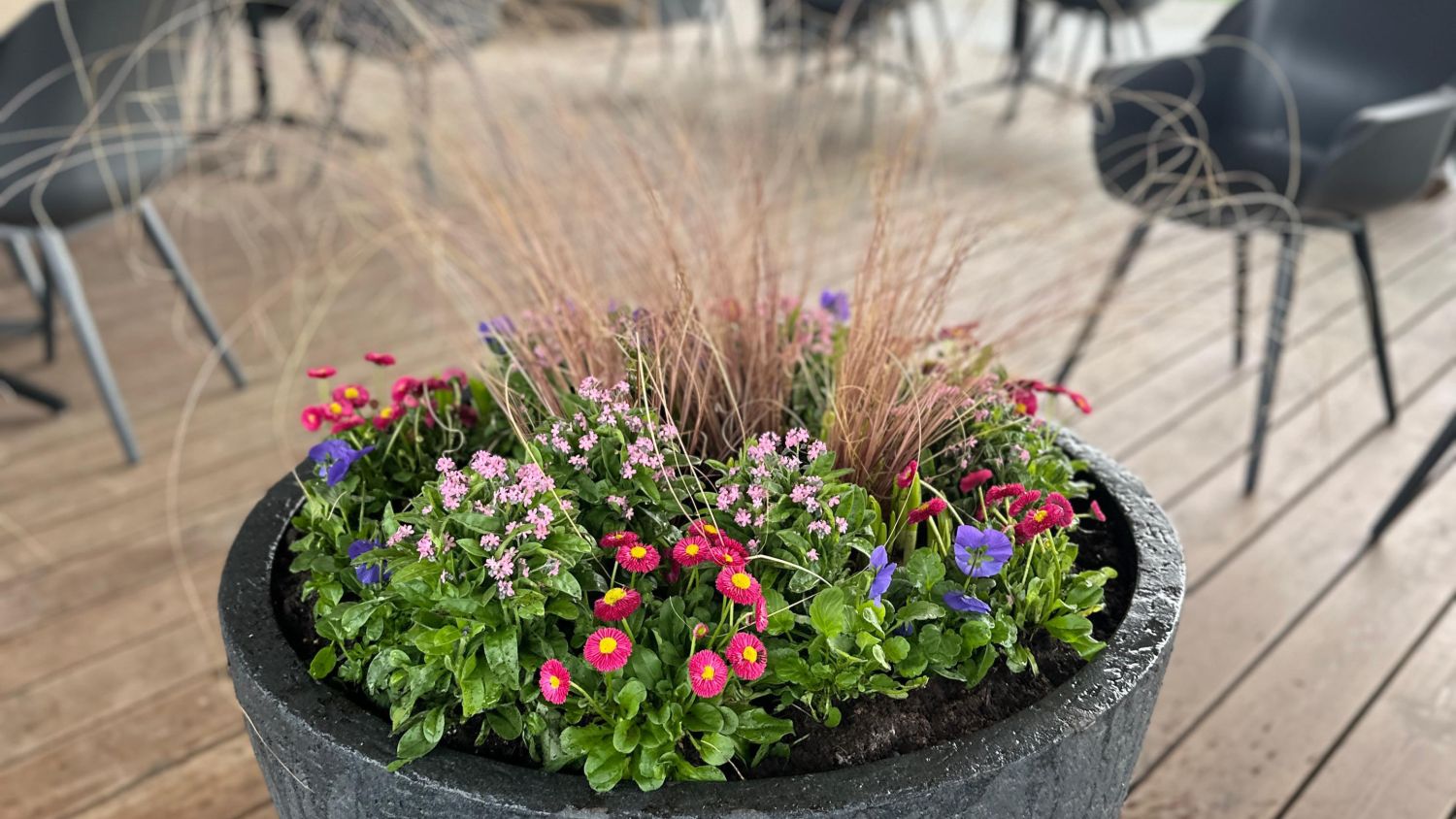
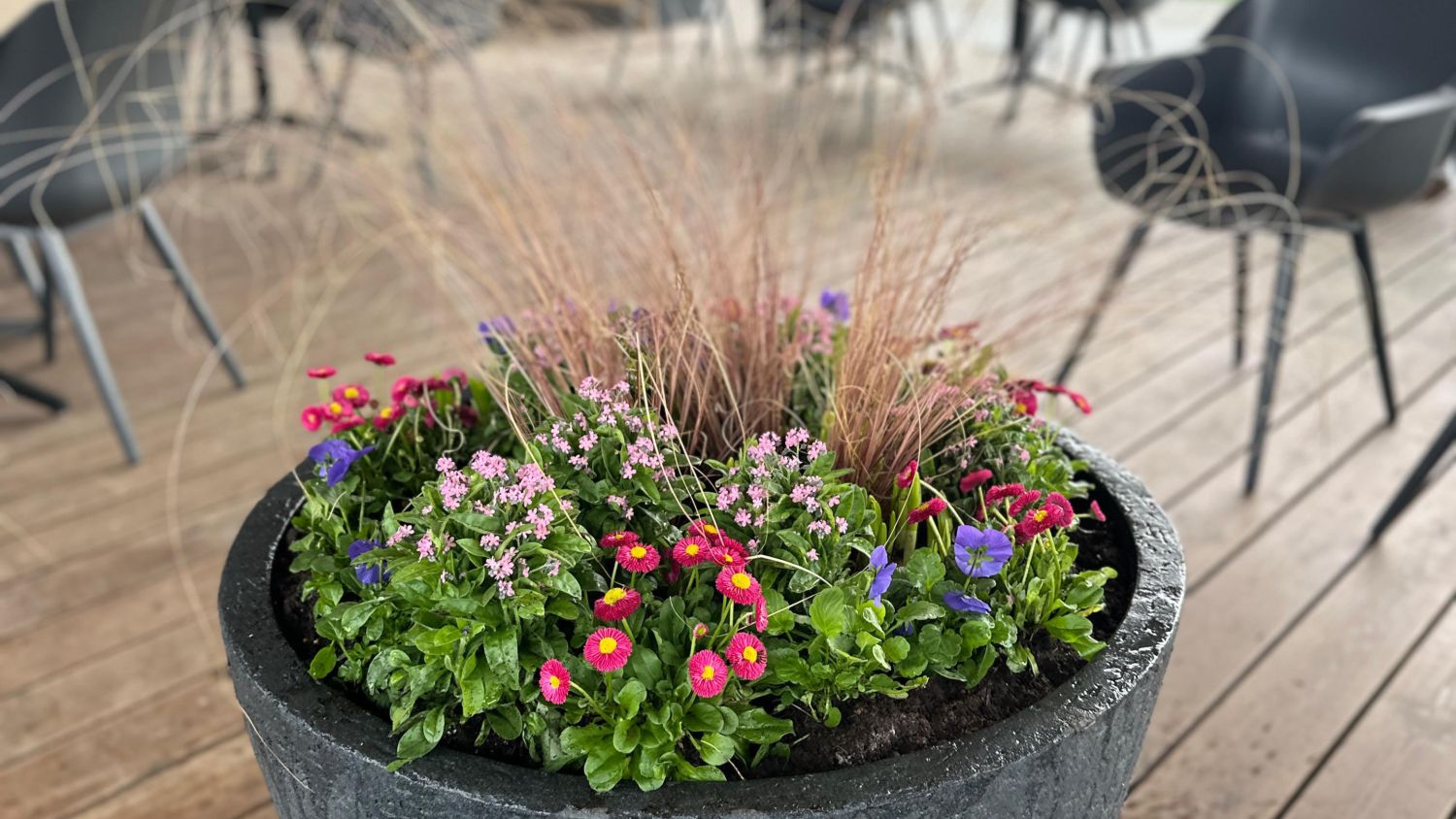
The container planting of the ladybird with alien plants,cherry b lossom and pinkmindwort gives a soft spring effect. Chickweed is often considered a weed, but with beautiful varieties it is very showy in a spring container. In the centre, the bracken, although a little frosted, provides height and lasts until the summer planting comes on.
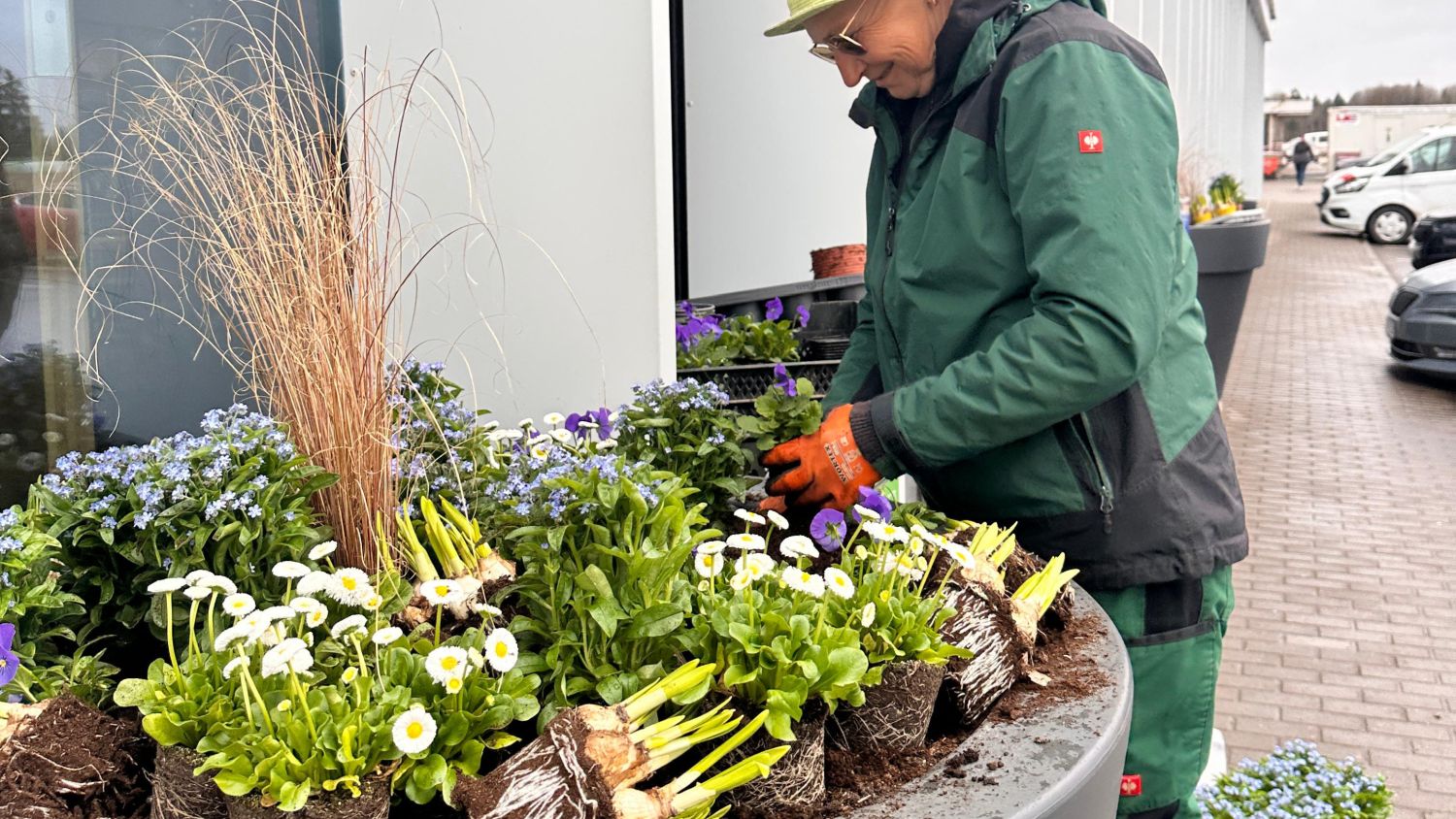
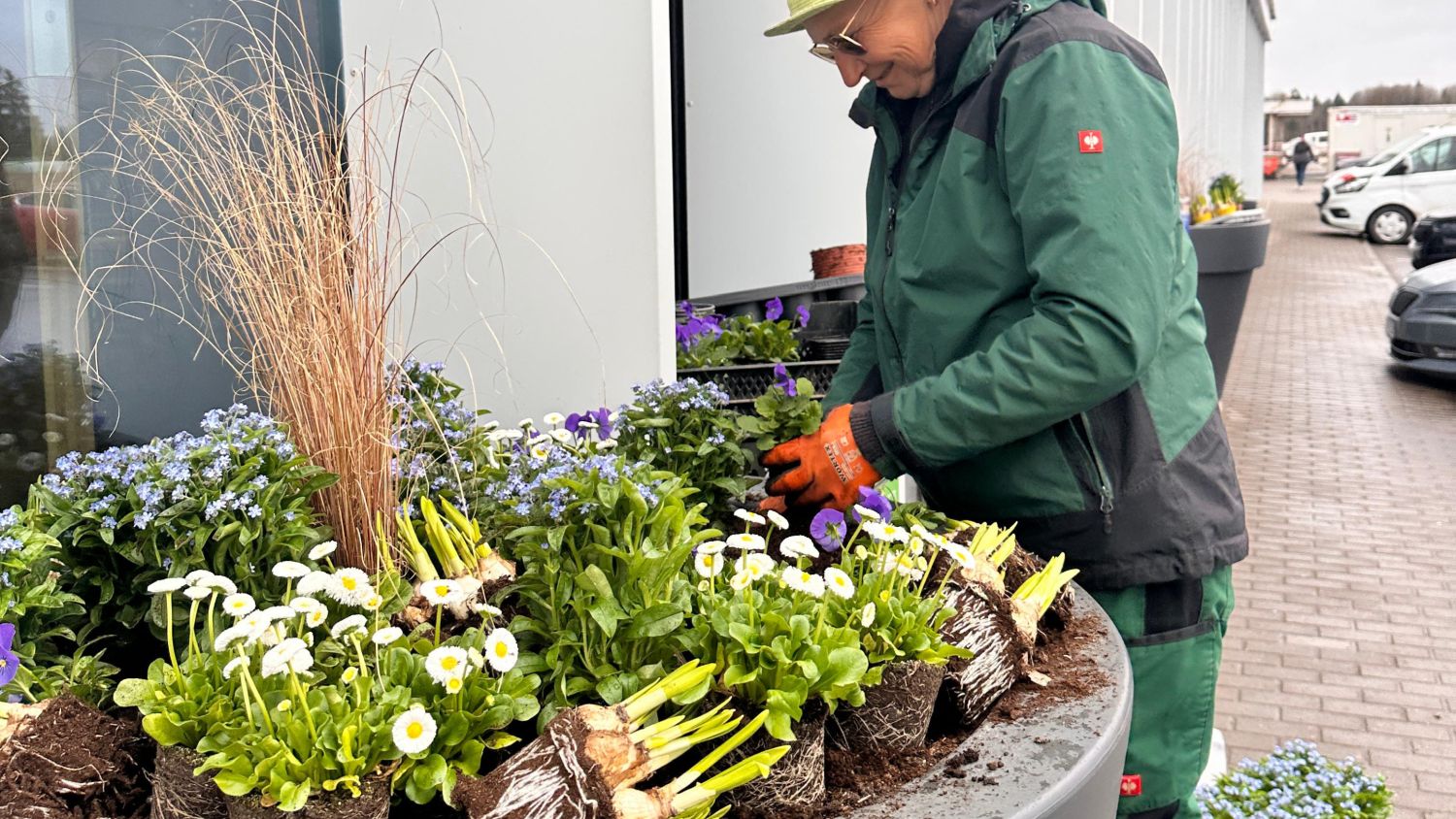
3.White cherrycups, daffodils and mindfulness stay fresh for a long time. White cherrycups, daffodils, hornworts and blue mindfulness form a combination that stays fresh for a long time. The dense root system of the daffodil is clearly visible here: the pot is full of roots, which means it needs a lot of water.
4.Yellow with tulips and hornworts for a strong and cheerful effect. Wild strawberries, yellow tulips, yellow hornworts, foxglove and foxglove make a strong, cheerful and eye-catching combination. A good example of how a cohesive colour scheme works.
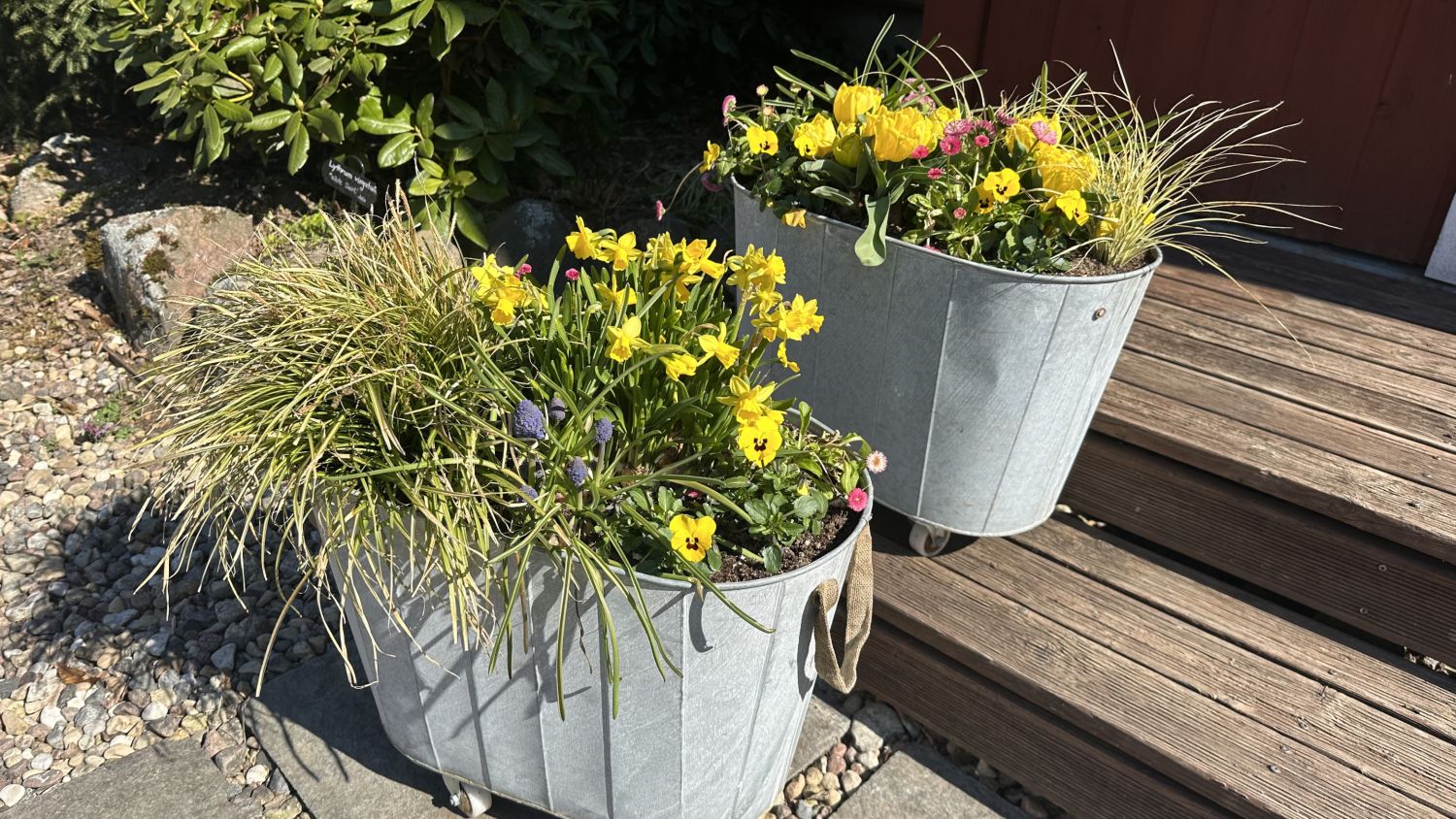
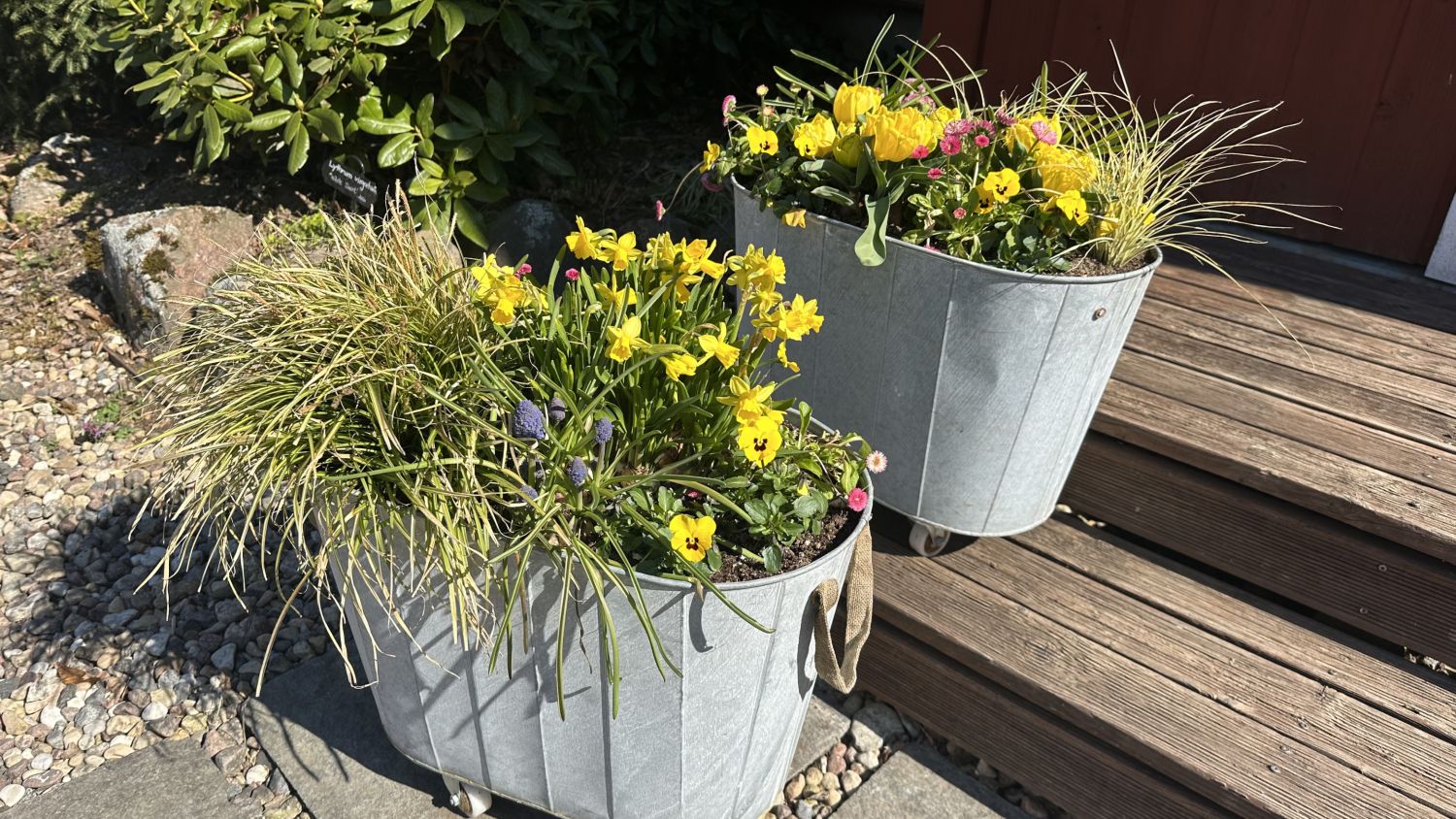
5.Tone-on-tone Tete-a-Tete and yellow tulip work well. Tete-a-Tete daffodils with yellow tulip and airy pumpkin. The tone-on-tone solution works well. When the flower shapes are different, the picture does not become monotonous.
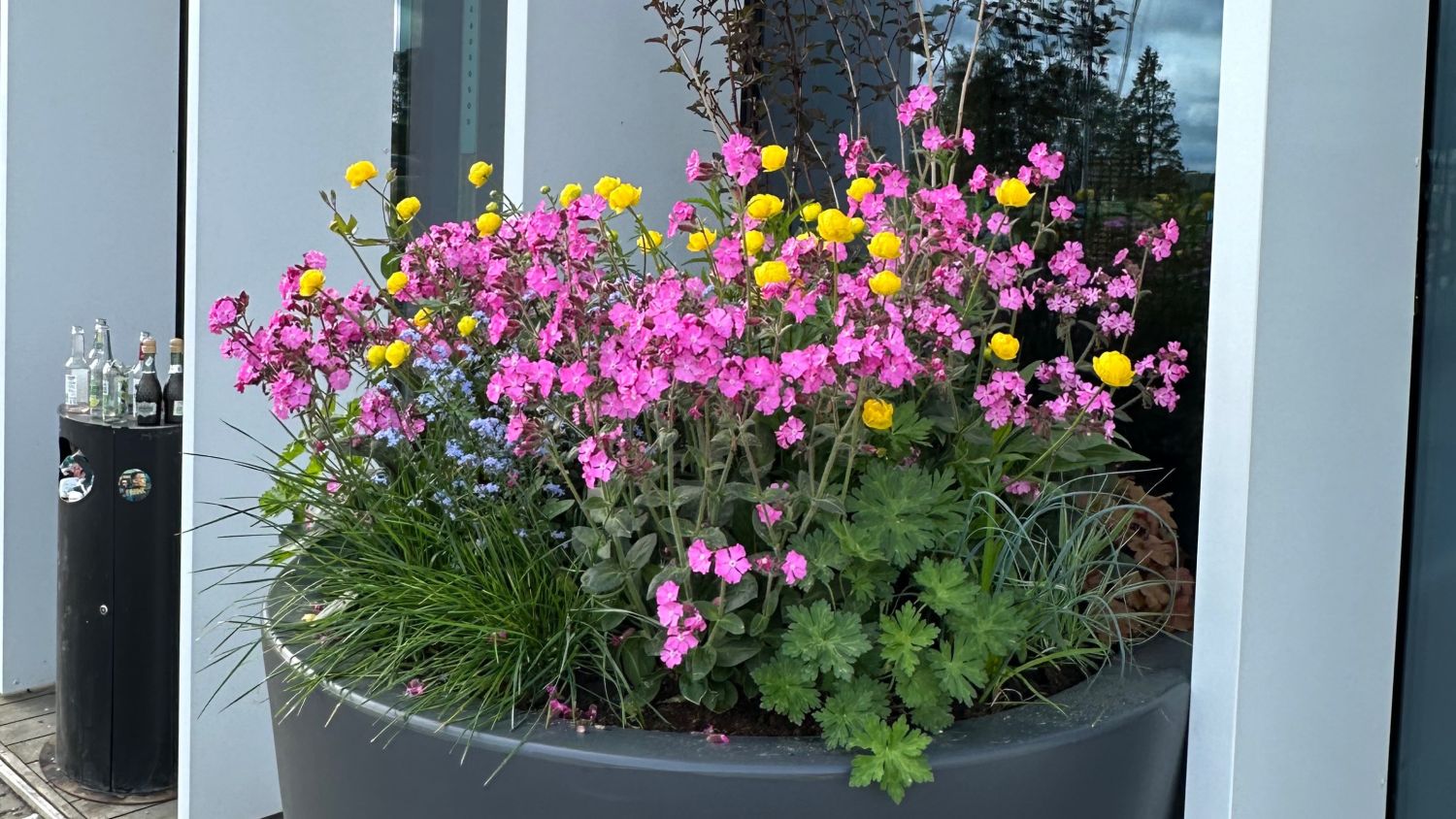
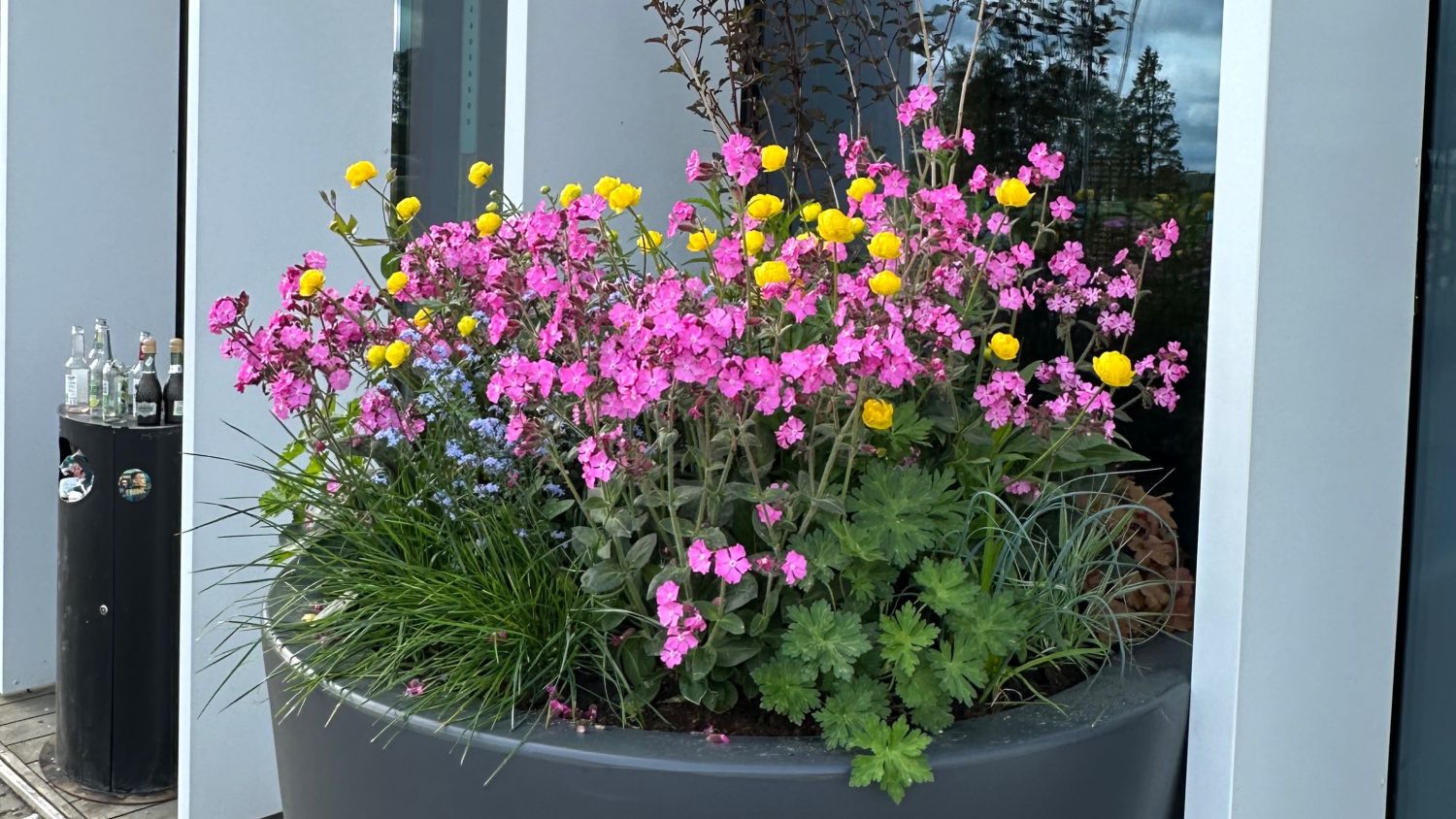
6.A spring planting that transitions smoothly into summer. A late spring picture: the mind's eye is still flowering, but summer-flowering perennials, such as stockinette and lovage, have already been planted alongside. The bog-root border provides good structure. There is no need to replace the spring planting overnight, a smooth transition is also possible.
7.Summer Beauty can look surprisingly good for a long time in a container. Summer Beauty overwintered surprisingly well in a container. Last year, the sedge flowered until almost the end of June and the summer planting could not be done before then.
8.Sword and showy redbud foliage. Sword variety with redbud foliage - it's not just the flowers that count here, but also the visual effect of the foliage. The redbud is frost resistant and is well suited for adding texture to containers.
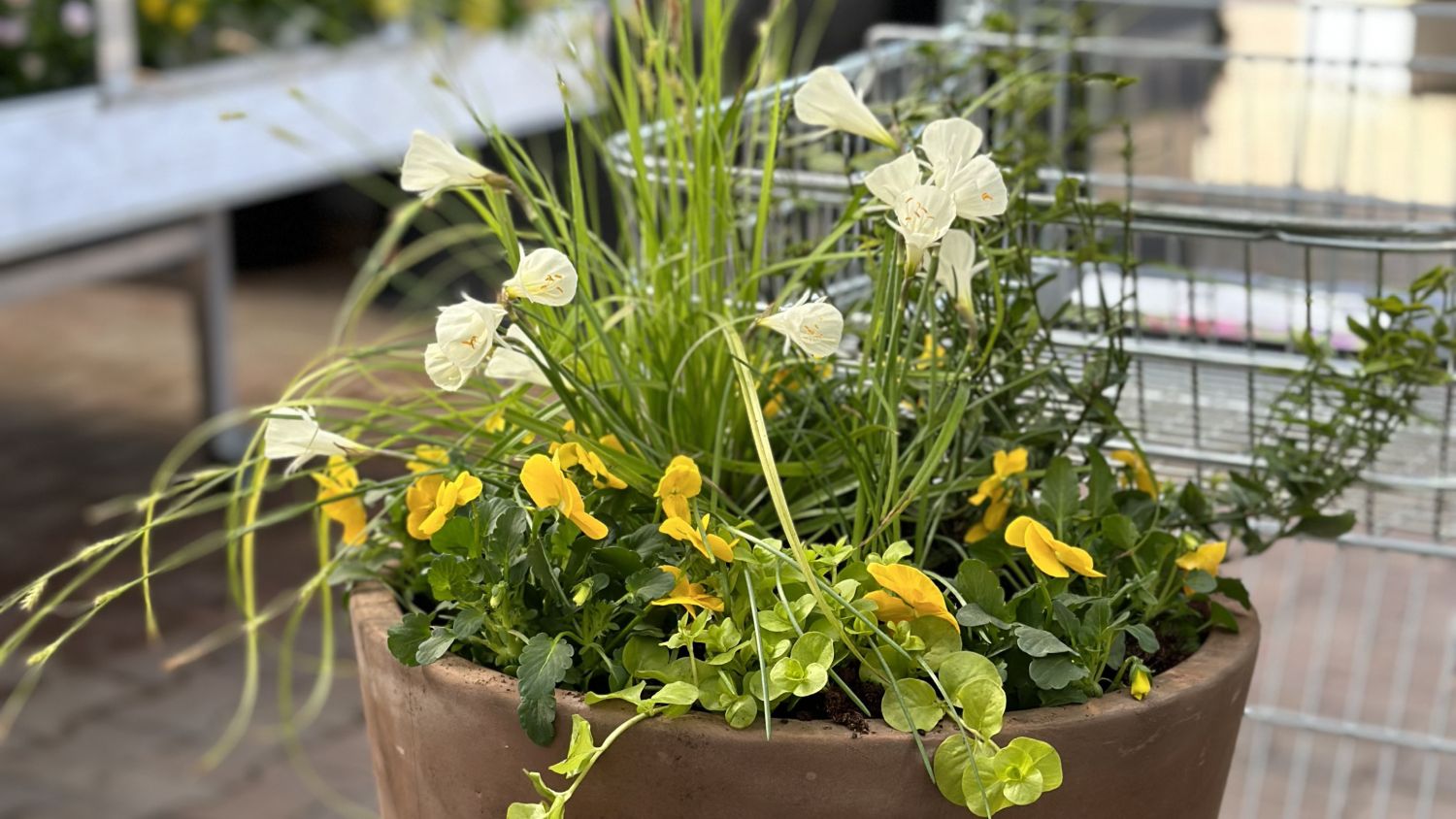
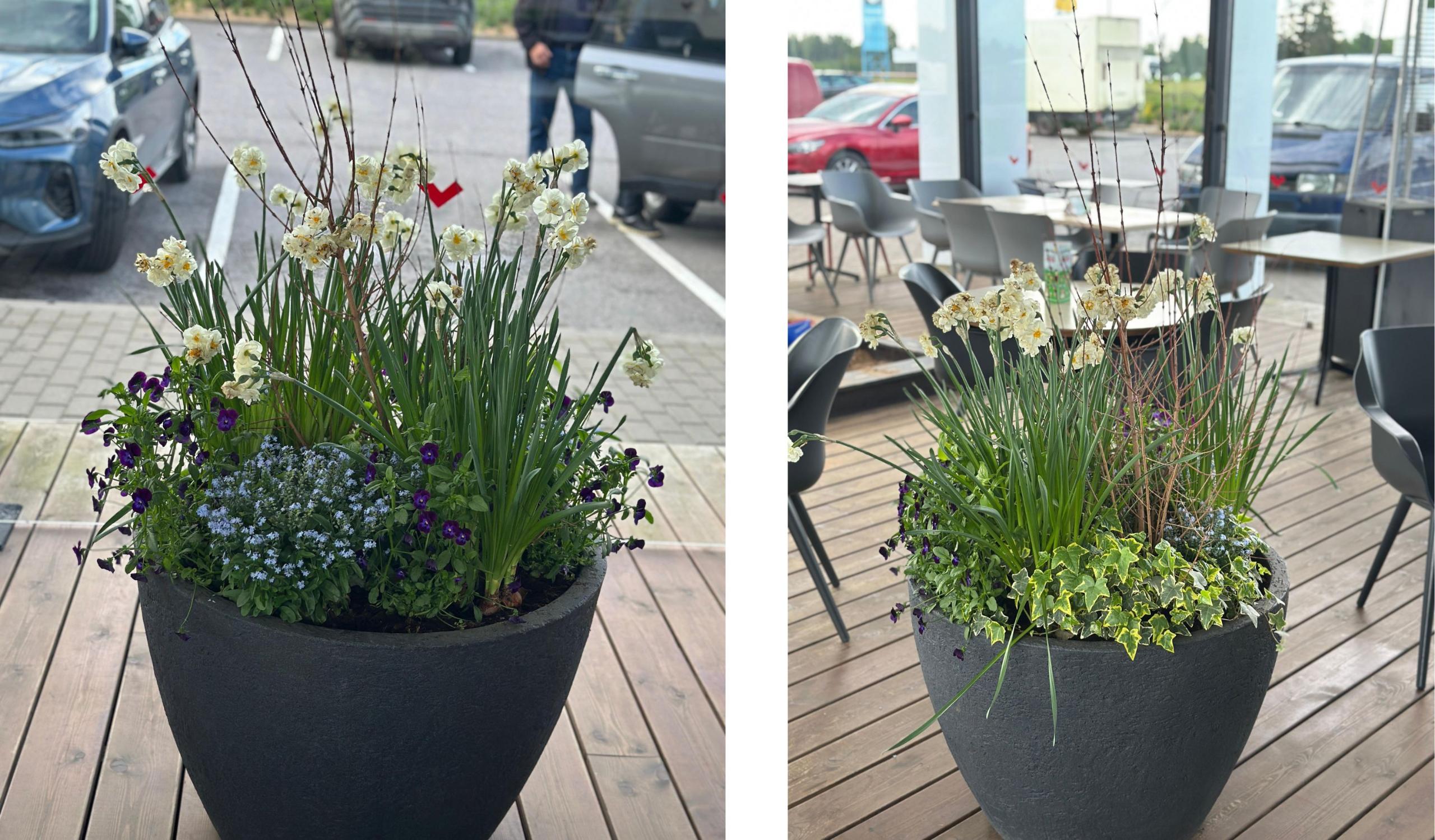
9.Phalaris arundinacea with daffodils and broomcorn. Plants that tend to over-expand in the garden can also be used in containers. Phalaris arundinacea, with its yellow-green variegated foliage, will not sprawl in a container. With its white daffodils and ivy, it makes an elegant and textural combination.
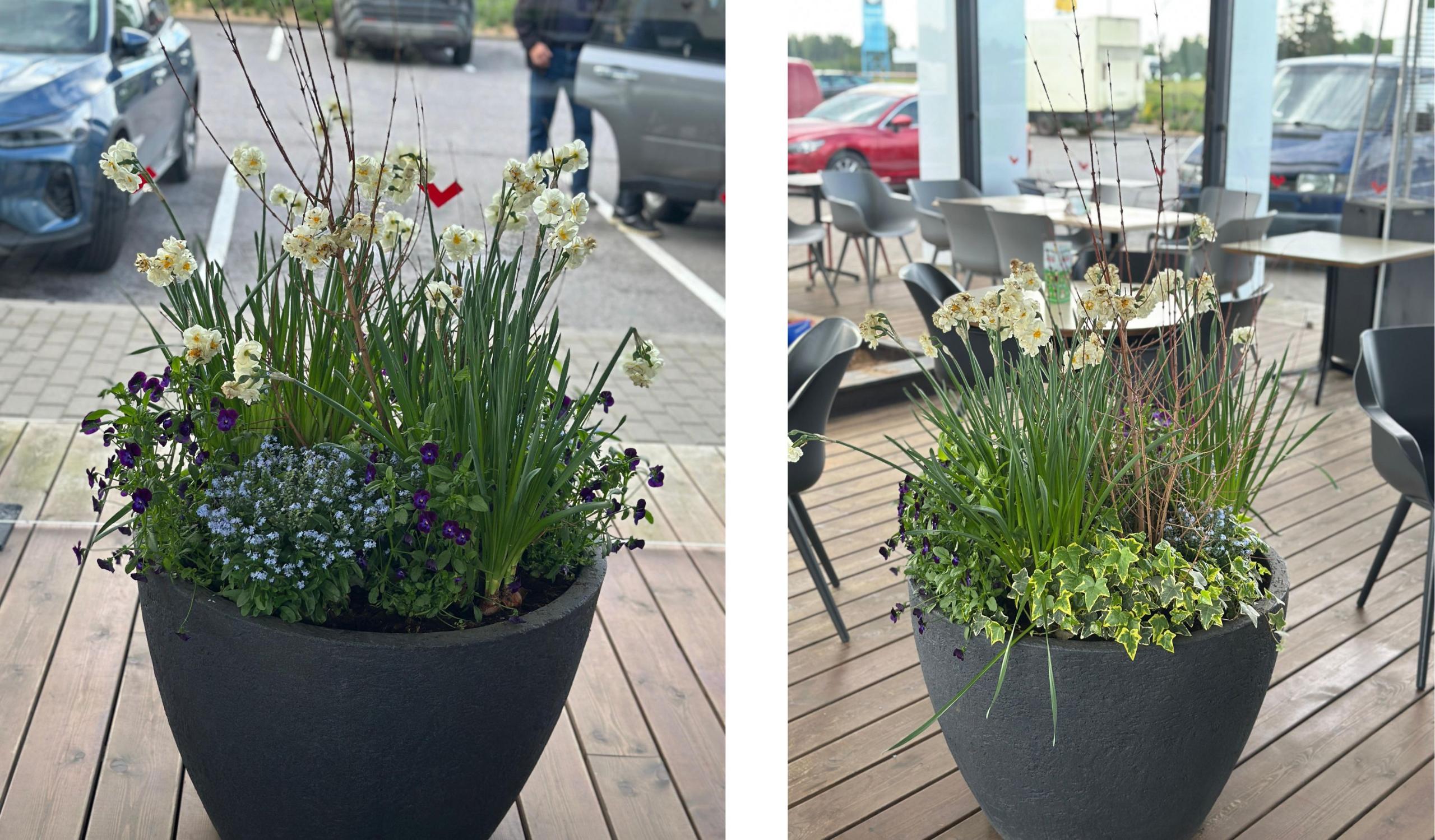
10.The branches add height and character to the spring planting. The coneflowers were planted as a separate plant in a container with white daffodils, mindsakes and hornworts. White daffodils give height and flower for a surprisingly long time at low temperatures.
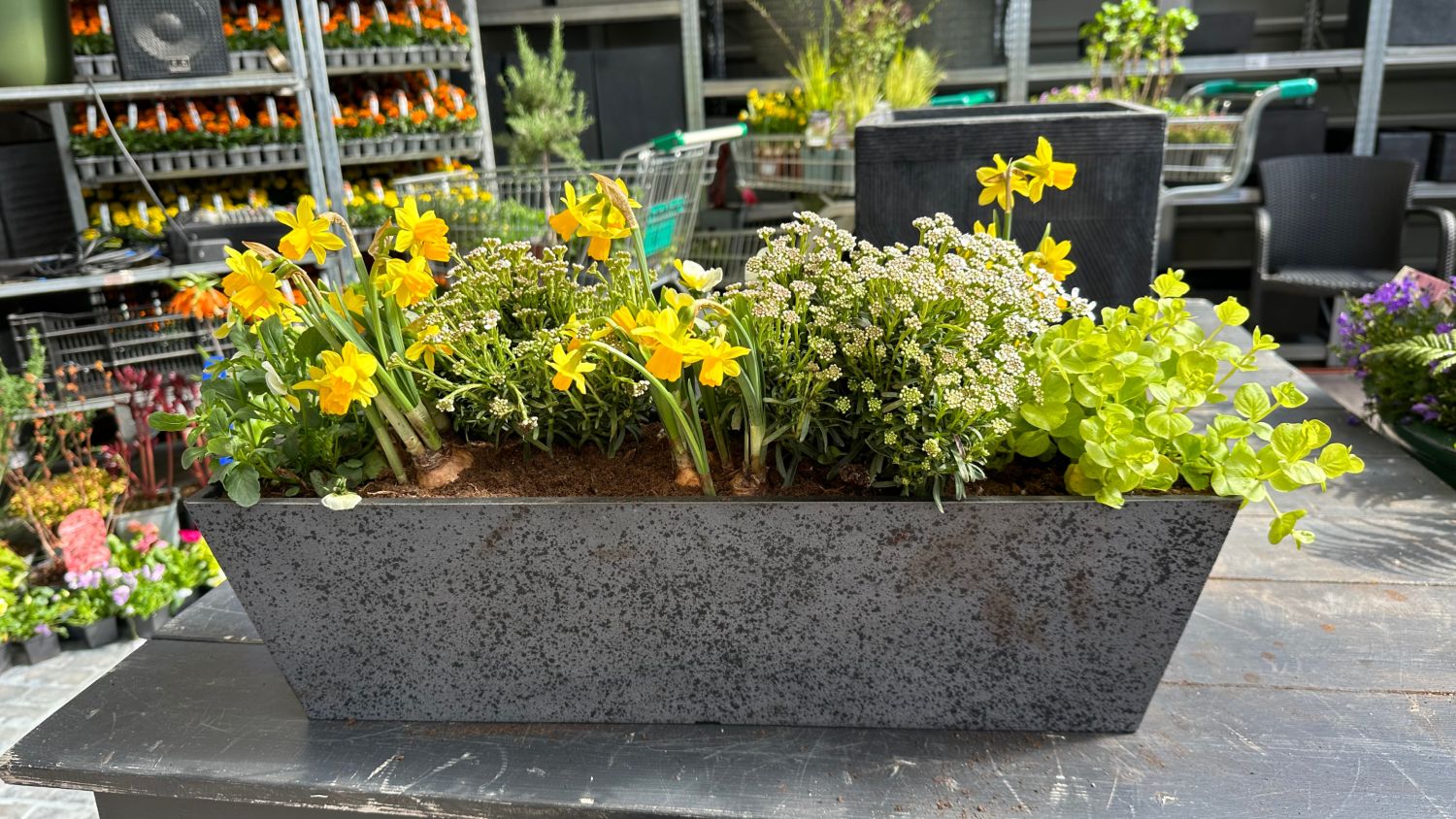
11.A spring container can also be a temporary solution. White-yellow mix: creeping wild vetch, Tete-a-Tete daffodils, horned lilies and evergreen early flowering violets. The holly is here for a spring effect, to be replaced later.
12.The choice of container also sets the mood. Gorgeous containers from Hansaplant. If you combine the colour of the container with the tones of the planting, you get an extra dimension to the whole, for example a purple container with purple flowers.
13.Evergreen plants also help to create structure in spring. Hornflowers, an interesting species of narcissus, Euonymus fortunei or the chickweed and the fern. The evergreen and frost hardy, the honeysuckle will add structure to the container even when there are no flowers.
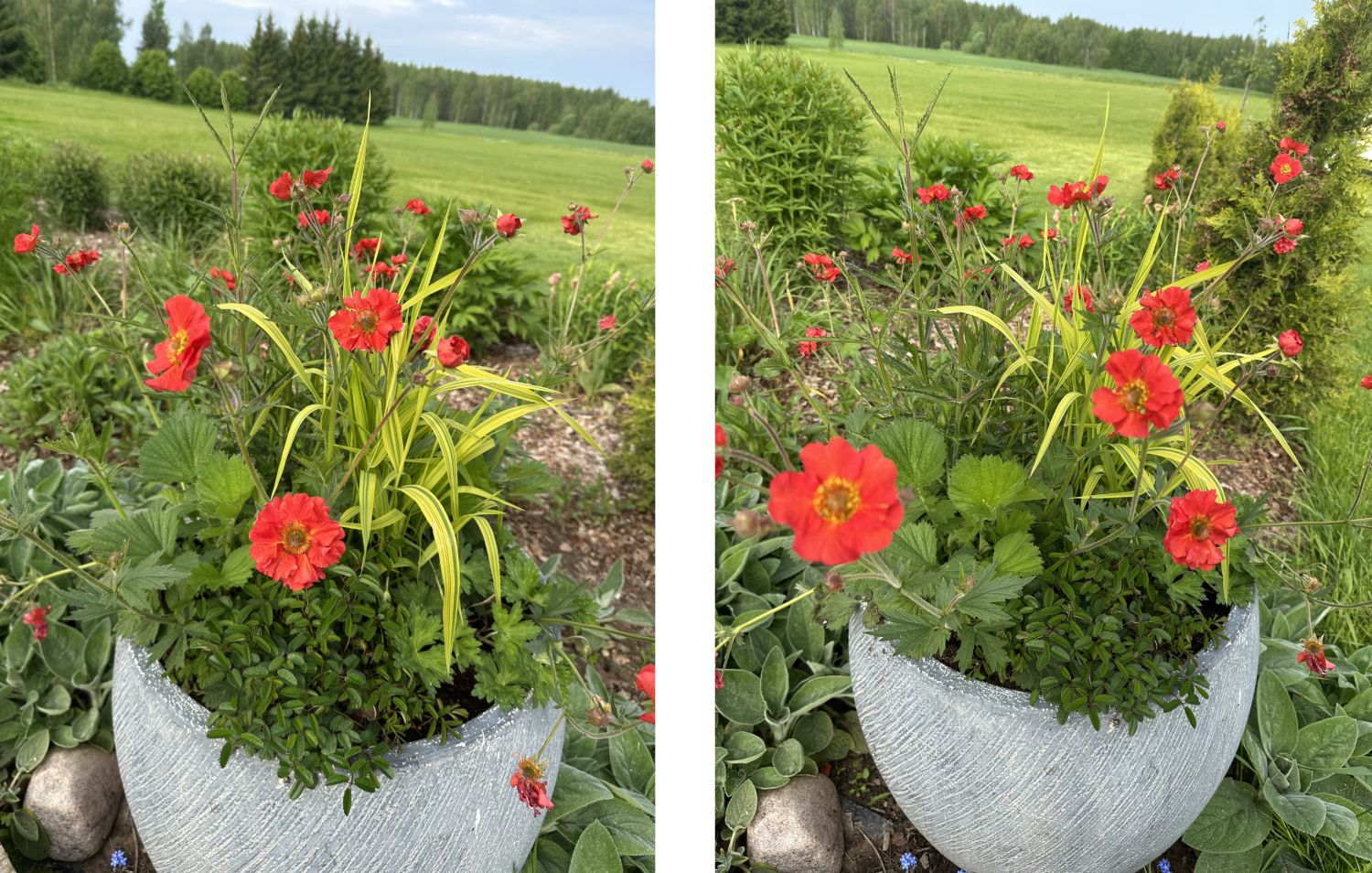
14.In a spring container, you can also use perennials that have a short-lived effect, such as the very strong, but short-lived effect provided by the marigold. A bush in a spring container is also a surprising choice - the emerging shoots are intensely red.
Start with just one pot
Maria's message is simple: it pays to experiment. Spring container plantings don't have to be perfect right away. All you need is one pot, one guide and one support. As long as the container matches the style of the house and you don't forget to water, you've made a good start.
For inspiration, we've also put together five container planting solutions that work, which you can download for free here: 5 ready-made spring container planting ideas that you can do yourself right now https://palusalu-aiad-ou.kit.com/bd56ade692
For those who want to go one step further, you can also learn a more holistic approach. Palusalu Gardens https://palusaluaiad.ee/koolitustel focuses on how to design a balcony or terrace so that the different containers form a coherent and well thought-out whole.
The most important thing, however, is the pleasure of doing it yourself. A planting created with your own hands offers a satisfaction that is hard to put into words. And when the first spring container blooms outside your door, it's a feeling you can feel right away.
Õige anum: suurem on parem
Kui nägemus soovitud tulemusest on selge, on järgmine samm anuma valik. Reegel number üks on lihtne: vali alati suurem anum, kui esialgu tundub vajalik.
Väikesed anumad kuivavad eriti tuulistes kohtades kiiresti läbi ja vajavad rohkem hoolt. Kuigi kevadel ei pea veel kuumalainetega võitlema, annavad suuremad potid ja konteinerid võimaluse luua efektsemaid lahendusi, lisada rohkem tekstuuri ja pakkuda rikkalikumat lilleelamust. Suuremas anumas on ka lihtsam saavutada seda kevadist lopsakat ja terviklikku muljet, mida konteineriga sageli otsitakse.
Pott peaks sobituma ka maja ja ümbruse stiiliga. Rahuliku fassaadi juurde sobivad näiteks klassikalised savipotid ja keraamilised konteinerid. Kui taust on juba detailirohke, võiks konteiner jääda pigem lihtne ja rahulik, et üldmulje ei muutuks liiga rahutuks. Puhta ja tagasihoidlikuma tausta juurde soovitab Maria lisada aga mõne särtsakama iseloomuga poti.
Kindlasti tasub veenduda, et potil oleksid äravooluavad. Kui põhjas auku ei ole, tuleks see ise teha või kasutada poti sees teist, aukudega anumat. Ilma äravooluta koguneb vesi potti ja taimed võivad lõpuks mädanema minna.
Kujunduslikult mõjuvad kaks kuni kolm sarnases stiilis potti enamasti paremini kui üksik, omapead jäetud konteiner. Kordus loob korra ja harmoonia. Seepärast ei ole poti valik ainult praktiline otsus, vaid mõjutab otseselt ka seda, millise üldmulje istutus lõpuks jätab.
Muld ja kastmine on sama oluline kui taimed ise
Hea muld on täpselt sama oluline kui taim ise, aga seda märgatakse tavaliselt alles siis, kui midagi valesti läheb.
Juhuslikku ja odavat mulda ei tasu kasutada. Vali kvaliteetne istutusmuld, mis on mõeldud just potitaimedele, näiteks Matogardi mullasegud https://www.matogard.ee/ või Eesti Turbatoodete https://www.inkodu.ee/as-eesti-turbatooted-turbatoodete-ning-kasvusubstraatide-tootmine-ja-muuk/1354 või Biolani turbasubstraadid. Komposti lisamine segule on samuti hea mõte. Matogardil on kompost juba mullasegudes sees, aga teistele võib seda eraldi juurde segada.
Odavad mullad on sageli kehvema kvaliteediga, sest toitainete tasakaal võib olla paigast ära. Sellises mullas jäävad taimed nõrgemaks ja võivad kergemini hallitama minna. Taime edukas kasv konteineris sõltub seega väga palju sellest, millised tingimused talle lood. Konteineris kasvav taim sõltubki palju rohkem sellest, millised tingimused talle potis luuakse, kui peenras kasvav taim.
Istutamisel tuleb taimed kindlasti korralikult läbi kasta, eriti nartsissid ja tulbid, sest neil on tihe juurekava ja suur veevajadus. Tuul ja päike võivad istutuse ootamatult kiiresti läbi kuivatada, seepärast jälgi niiskust regulaarselt. Aga ka liigniiskus on ohtlik. Kui taim on longus ja muld tundub näpuga katsudes märg, on vett liiga palju. Selline olukord võib üsna kiiresti viia juurte mädanemiseni.
Kevadisse konteinerisse vali taimed, mis taluvad jahedust
Kevadkonteinerisse sobivad taimed, mis taluvad jahedust ja öökülmi, sest aprillis on see Eestis täiesti tavapärane. Lisaks tasub mõelda ka õite kujule ja lehestikule ehk sellele, kuidas need omavahel koos toimivad. Hea kooslus ei sünni ainult värvist. Kui paned kokku eri värvi võõrasemasid ja sarvkannikesi, saad rõõmsa värviküllase tulemuse. Kui soovid aga veel efektsemat istutust, tasub jälgida ka seda, et lehestike struktuurid ja võib-olla ka õite kuju oleksid erinevad.
Järgnevalt mõned näpunäited, millele toetuda
Sarvkannikesed on Maria absoluutne lemmik. Neil on palju rohkem õisi kui võõrasemadel, need annavad suure õiepahmaka ja kestavad kuni juuni keskpaigani. Võõrasemad taluvad hästi kuni viiekraadist külma, kuid nõuavad pidevat vanade õite eemaldamist. Sarvkannike õitseb aga edasi ilma erilise hoolduseta.
Nartsissid on varajased ja külmakindlad. Näiteks armastatud Tete-a-Tete on väikese kollase õiega ja pikalt õitsev sort. Suuremad valged nartsissid annavad konteinerile omakorda kõrgust. Mõlemad saavad kenasti hakkama ka öökülmaga.
Tulbid taluvad samuti aprillikülmasid, kui miinuskraadid ei lähe väga äärmuslikuks. Nende õitsemisaeg on küll lühem kui sarvkannikesel, kuid visuaalne efekt on tugev.
Hüatsindid ja kobarhüatsindid on aianduskeskustes laialdaselt saadaval ajatatud sibulatena. Hüatsint toob konteinerisse lisaks ilule ka lõhna. Kui tahad oma terrassil kevade lõhna tunda, vali idahüatsint.
Meelespea ehk aed-lõosilm ei ole Maria sõnul Eestis potitaimena kuigi levinud ja seda täiesti põhjendamatult. See kaheaastane taim õitseb väga hästi ja kaua. Valikus on nii roosa- kui ka siniõielisi sorte ning konteineris toimib see pikalt.
Luuderohi on hea valik varjulisemasse kohta. Seda müüakse aiandites vahel isegi toataimede osakonnas, kuid tegelikult sobib see kevadisesse konteinerisse väga hästi. Oma rohelise, üle potiääre ulatuva lehestikuga pakub taim kaunist vaatepilti.
Tarnad annavad konteinerile kõrretaolise ja õhulise tekstuuri. Ainult õitega sellist efekti ei saavuta. Riistarn on Maria suur lemmik, kuigi taim ei ole Eestis külmakindel. Maria naerab, et kui tekib soov sellist efekti istutusse lisada, kasutab ta seda ikkagi. Tarna võib tuua ka lihtsalt metsast. Meie metsades leidub täiesti mõnusa keskmise kasvuga puhmikulise vormiga tarnaid, millel kasvavad juba uued lehed. Ka sammal sobib alati suurepäraselt põhja katmiseks.
Dekoratiivoksad annavad konteinerile kõrgust ja iseloomu ka siis, kui midagi rohkem istutada ei taha. Hästi sobivad näiteks paju- ja kontpuuoksad.
Taimevaliku loogika: juhttaim ja tema toetajad
Oluline pole mitte ainult see, milliseid taimi valida, vaid ka see, kuidas neid omavahel kombineerida.
Alustada võiks alati ühest juhttaimest, mis määrab istutuse meeleolu.
Tahad rõõmsat ja värsket tulemust? Vali kollane nartsiss või kollased tulbid, sest kollane sümboliseerib kevadet, energiat ja päikest.
Tahad romantilist ja pehmet tulemust? Vali roosad, sinakad või lillakad tulbid ja sarvkannikesed.
Tahad lollikindlat ja kauakestvat lahendust? Sarvkannike on parim valik. Tulbi ja nartsissi õitsemisaeg on ainult murdosa sarvkannikese omast, sest kui ilmad soojaks lähevad, on nad kiiresti läbi.
Kui juhttaim on valitud, lisa toetavad taimed põhimõttel, et need ei hakkaks põhitaimega konkureerima. Toetav taim peaks pigem meeleolu suurendama, aga mitte tähelepanu röövima. Hea tasakaalu loovad suurema õiega põhitaim ja tagasihoidlikuma õiega toetaja või saatja. Näiteks nartsiss koos valgete või lillakate sarvkannikestega, roosad tulbid koos heledate sarvkannikestega või hüatsindid koos madalate priimulate ja sarvkannikestega.
Vähem värve, rohkem kihilisust ja kõrgusega mängimist
Üks lõks, kuhu on kerge sattuda, on liiga palju värve ühes potis. Aianduskeskuses on kõik ilusad, aga läbimõtlematult ühes potis koos mõjuvad need pigem mürana kui iluna.
Ilusa tulemuse saab näiteks siis, kui kombineerida:
Valge + roheline (valged nartsissid, valged võõrasemad, luuderohi) = rahulik ja elegantne.
Kollane + lilla (kollased nartsissid, lillakad sarvkannikesed) = tugev ja rõõmus kontrast.
Roosa + valge + heleroheline (roosad tulbid, valged sarvkannikesed, tarn) = pehme ja õhuline.
Naturaalne kooslus (valge õitseja + roheline lehtdekoratiivne taim + sammal + dekoratiivoksad) = rahulik, aialik ja ajatu.
Värvide kõrval tasub mõelda ka tekstuurile ja kõrgusele. Kui konteineris on ainult madalad võõrasemad, jääb proportsioon veidi lamedaks. Lisa midagi, mis annaks kõrgust, nagu pikemad nartsissid, tulbid, tarnad ja oksad, ning midagi, mis laskub üle ääre, nagu luuderohi. Nii saab konteiner selgroo. Väga hea taim on ka bergeenia, mis sobib kevadistesse konteineritesse väga hästi, sest mingil hetkel hakkab ta õitsema, aga tal on ka võimsad lehed. Lisaks sobib see ka varjulisemasse kohta.
Inspiratsiooniks: näited kevadistest konteineristutustest
Allolevad näited annavad aimu, kui erinevaid tulemusi on võimalik kevadiste konteineristutustega saavutada. Siin on nii lihtsaid ja kiiresti teostatavaid lahendusi kui ka läbimõeldumaid kooslusi, kus mängitakse värvide, kõrguse ja tekstuuriga. Vaata, milline meeleolu sind kõnetab, ja kasuta ideid oma ruumi ja maitse järgi.
1.Väikesed korduvad potid aknalaual. Väikeste pottide eelis on paindlikkus ja kordus: igasse potti saab panna erineva taime ning kui üks ära õitseb, saab selle lihtsalt välja vahetada. Kuivamisoht on suurem, aga visuaalne efekt aknal või trepil on armas.
2.Võõrasemad, kirikakrad ja meelespead annavad pehme kevadise tulemuse. Tikupoisi konteineristutus võõrasemade, kirikakarde ja roosa meelespeaga. Kirikakart peetakse sageli umbrohuks, kuid ilusate sortidega on ta kevadises konteineris väga efektne. Keskel pronkstarn, mis on küll pisut külmunud, kuid annab kõrgust ja kestab, kuni suvine istutus peale tuleb.
3.Valged kirikakrad, nartsissid ja meelespea mõjuvad kaua värskena. Valged kirikakrad, nartsissid, sarvkannikesed ja sinine meelespea moodustavad koosluse, mis püsib kaua värske. Nartsissi tihe juurekava on siin hästi näha: pott on juuri täis, mis tähendab suurt veevajadust.
4.Kollane kooslus tulpide ja sarvkannikestega mõjub tugevalt ja rõõmsalt. Riistarn, kollased tulbid, kollased sarvkannikesed, kobarhüatsint ja tarn moodustavad tugeva, rõõmsa ja pilkupüüdva koosluse. Hea näide sellest, kuidas ühtne värvilahendus toimib.
5.Toon-toonis Tete-a-Tete ja kollane tulp toimivad hästi. Tete-a-Tete nartsiss koos kollase tulbi ja õhulise kõrrelisega. Toon-toonis lahendus toimib hästi. Kui õiekujud on erinevad, ei muutu pilt üksluiseks.
6.Kevadine istutus, mis läheb sujuvalt üle suviseks. Hilisem kevadpilt: meelespea õitseb veel, aga kõrvale on juba istutatud suvehakulised püsikud, näiteks sileene ja kullerkupud. Luht-kastevars servas annab head struktuuri. Kevadist istutust ei pea üleöö välja vahetama, võimalik on ka sujuv üleminek.
7.Sileene ja lauk Summer Beauty võivad konteineris üllatavalt kaua head välja näha. Sileene ja lauk Summer Beauty talvitusid konteineris üllatavalt hästi. Sileene õitses eelmisel aastal peaaegu juuni lõpuni ja suvist istutust ei saanudki enne peale teha.
8.Mõõla ja efektne punanupu lehestik. Mõõla sort koos punanupu lehestikuga – siin ei loe ainult õied, vaid ka lehestiku visuaalne efekt. Punanupp on külmakindel ja sobib konteinerisse lisastruktuuri andmiseks hästi.
9.Phalaris arundinacea koos nartsisside ja luuderohuga. Konteineris võib kasutada ka taimi, mis aias kipuvad liialt laienema. Kollase-rohelise kirju lehestikuga Phalaris arundinacea ei pääse konteineris laiali kasvama. Valgete nartsisside ja luuderohuga moodustab see elegantse ja tekstuurse koosluse.
10.Oksad annavad kevadisele istutusele kõrgust ja iseloomu. Kontpuuoksad istutati eraldi taimena konteinerisse koos valgete nartsisside, meelespeade ja sarvkannikestega. Valge nartsiss annab kõrgust ja õitseb madalal temperatuuril üllatavalt kaua.
11.Kevadine konteiner võib olla ka ajutise efektiga lahendus. Valge-kollane kooslus: roomav metsvits, Tete-a-Tete nartsiss, sarvkannikesed ja igihaljas varaõitsev ibeeris. Ibeeris on siin kevadise efekti jaoks, hiljem vahetatakse ta välja.
12.Ka anuma valik ise loob meeleolu. Uhked konteinerid Hansaplantist. Kui siduda konteineri värv istutuse toonidega, tekib tervikule lisadimensioon, näiteks lilla anum lillakate õitega.
13.Igihaljad taimed aitavad luua struktuuri ka kevadel. Sarvkannikesed, huvitav nartsissiliik, Euonymus fortunei ehk kikapuu ja tarn. Kikapuu on igihaljas ja külmakindel ning annab konteinerile struktuuri ka siis, kui õied veel puuduvad.
14.Kevadises konteineris võib kasutada ka lühiajalise efektiga püsikuid. Väga tugeva, kuid lühiajalise efekti annavad karukellad. Pojeng kevadises konteineris on samuti üllatav valik – tärkavad võrsed on intensiivselt punased.
Alusta kasvõi ühest potist
Maria sõnum on lihtne: katsetamine tasub ära. Kevadisi konteineristutusi ei pea kohe ideaalselt paika saama. Piisab ühest potist, ühest juhttaimest ja ühest toetajast. Kui anum sobib maja stiiliga ja kastmist ei unustata, on algus tehtud.
Inspiratsiooni jaoks on kokku pandud ka viis toimivat konteineristutuse lahendust, mida saab tasuta alla laadida siit: 5 valmis kevadise konteineristutuse ideed, mida saad ise kohe järele teha https://palusalu-aiad-ou.kit.com/bd56ade692
Kes soovib minna samm edasi, saab õppida ka terviklikumat lähenemist. Palusalu Aedade https://palusaluaiad.ee/koolitustel keskendutakse sellele, kuidas kujundada rõdu või terrass nii, et erinevad konteinerid moodustaksid ühtse ja läbimõeldud terviku.
Kõige olulisem on siiski ise tegemise rõõm. Oma kätega loodud istutus pakub rahulolu, mida on raske sõnadesse panna. Ja kui esimene kevadine konteiner ukse ees õitseb, on see tunne kohe käegakatsutav.